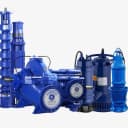
What is a floating pump?
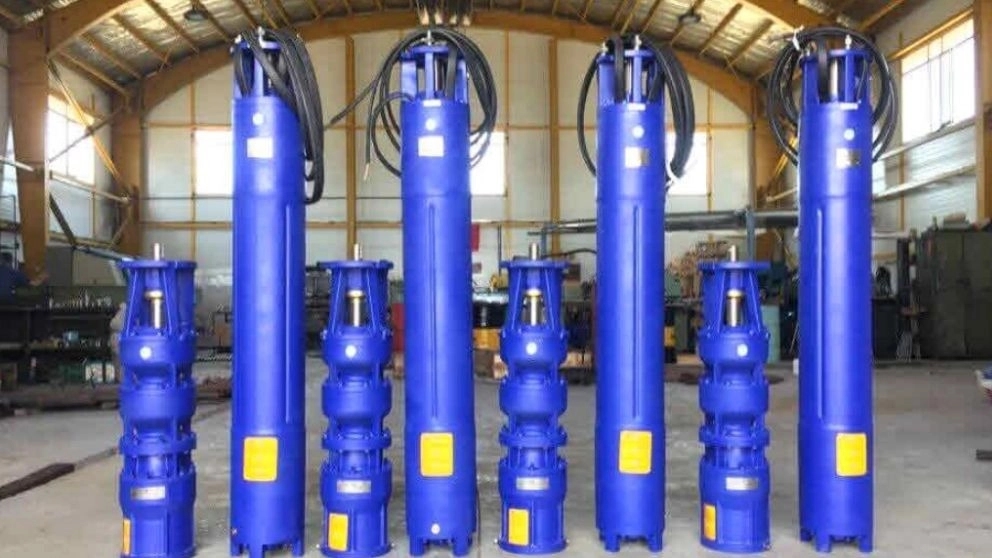
Submersible Pump is basically a type of vertical centrifugal pump that is used to transfer water or different fluids from deep wells and different tanks. These pumps can be produced as single phase or three phase and exist in different dimensions. These pumps are suitable for installation submerged in water, and their electric motor is cooled by water, and a one-way valve has been used at their outlet to prevent water from returning inside the pipe and damaging the motor. Because these pumps are used in wells with a narrow opening, they have a small diameter, and they are also called rod pumps, and their impeller is designed as a radial or mixed flow and can be cut. The submersible pump is also known by other names such as submersible electric pump, deep well submersible, water well submersible, well submersible pump, agricultural submersible pump, agricultural submersible well submersible, electromotor submersible and water submersible pump.
⚫️ Types of floating pumps
Floating pumps like vacuum pumps and other types of pumps can be classified based on various factors and parameters. As mentioned, in terms of power supply and electricity consumption, these pumps are divided into two main categories: single-phase and three-phase pumps, but their most important classification is in terms of their operation and scope of use, and accordingly, they are divided into three main categories:
Deep well submersible pumps (Submersible Pumps for wells) which have a two-layer structure and are known as submersible pumps, and as their name suggests, they are used to pump fluids from deep wells.
Submersible Sewage and Drainage Pumps, also known as sludge pumps, are mostly used to clean pools, wells, etc., and can pump thick fluids.
Submersible drainage pumps, also known as floor pumps, can have many industrial and non-industrial uses.
Of course, in addition to the aforementioned categories, submersible pumps can also be classified based on how they are designed and built, and based on this, these pumps can be divided into axial flow pumps, sheath shaft pumps, and turbine pumps, each of which has multiple structures, features, and applications. . Also, based on the output fluid volume, these pumps have a high variety and can have an output from 1 to 5 inches.
⚫️ Benefits and applications of floating pumps
Submersible pumps, like other types of pumps, can have many uses according to their design, structure and features. These pumps have many advantages such as high efficiency, low energy consumption, no need for a foundation, silent operation, long life and durability, no need for ventilation, adaptability to harsh temperature conditions, etc., and their most important applications include the following He mentioned:
These pumps are used in fire fighting and emergency water supply.
They are used in water purification and water purification facilities, as well as removing clean water from deep and semi-deep wells.
They can be used in residential and industrial water supply systems such as mines and RO or reverse osmosis systems.
They are used in industrial and semi-industrial water softeners.
They can be used in water features, greenhouse irrigation, pressurized irrigation, land drainage and rain irrigation systems.
They are used to strengthen and increase water pressure in gardens, agriculture and agricultural industry.
⚫️ The most important tips for buying floating pumps
since today's floating pumps have many industrial and non-industrial applications of diversity are high and people may face many challenges in choosing and buying them. Among the most important factors that should be considered when choosing and buying these pumps, the following can be mentioned:
The depth of the well and the reservoir from which the fluid is pumped must be determined.
The level of water stagnation inside the well must be known< /p>
The length of the pumping path and the level difference from the well opening to the discharge point It must be determined.
The type and size of the pipe, as well as the type and number of connections used, should be taken into consideration.
The flow rate of the floating pump must be checked and this factor can be influenced by factors such as land area, required water volume, tank or well volume, etc.
Also things like the diameter of the opening The well, the classes of floats, the type of electric motor, etc. should be taken into consideration when choosing and buying a submersible pump.
⚫️ The general properties and how the floating pump works works
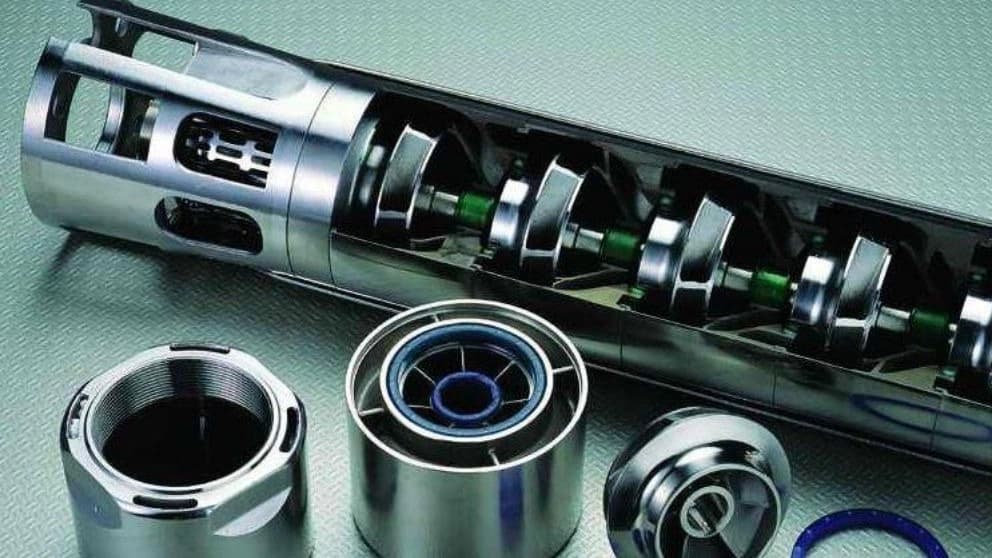
The floating pump, like other types of pumps, can have different characteristics. These pumps usually have 1.5 meters of flexible cable, and their output size is at least 1.1/4 inches and at most 12 inches, and their lubrication is done by edible oils or water and glycol solution. These pumps have the ability to transfer water up to 800 meters and are usually made of stainless steel or cast iron, and their impellers are made of steel, Noril (engineering plastic), bronze or cast iron.
The way these pumps work is that they take water from the middle part They suck and depending on the type of use, they can have from two to twenty blades. The rotation direction of the propellers is counterclockwise and they are connected to a shaft and are rotated by an electric motor. The fluid enters the pump due to the circulation of the impellers and then due to the presence of centrifugal force, it will be transferred to the next impeller and this process continues until the fluid reaches the outlet opening and its pressure increases at each stage. On the way out, a one-way valve is used to prevent water from returning to the pump and damaging it.